Monday, October 22, 2012

Social Media Marketing Sites

Mashable.com

Mashable.com is a social media website. You can access the website on your own, or you can sign in using your Facebook or Twitter account. There are many different types of social media news that you can access from this website, which are divided into categories based on genre. The tabs are labeled Social Media, Tech, Business, Lifestyle, Water cooler, Entertainment, US & World and videos. These lead to different kinds of stories based on these categories. For example, under US & World you can find stories about politics and government, while under Water cooler you can find comics, memes, pictures and videos. Meanwhile, on the rest of the page you can find the top stories that are happening that day, the highest trending topics that are being discussed and the top photos and videos that are being viewed on this website. This is a good website to use to keep up with the world.


Readwriteweb.com

Readwriteweb.com is now called readwrite.com. The purpose of this social media marketing website is to keep yourself updated on the daily news of technology and its users. For example, there are about five to seven articles every day going back a couple of days that are visible on the home page. These articles come a variety of different topics, such as Microsoft, Apple, International, Photography and even posts from the people directly from ReadWrite.com. When you click on an article, the website takes you to a page with the article where you can comment on what was written and learn a little bit more about the author. At the bottom of the page, you can find links to past articles that have been published. You can also like the articles on Facebook or share them on Twitter or Google Plus. This website deals with more articles strictly in the media world.


Thenextweb.com

Thenextweb.com is a social media website that deals with a lot of the legal parts of being in the media. The articles that are being featured are ones about different companies and how much money they are making (or not making) and the new kinds of software that is now readily available for certain technology. There are three main general separations between the articles: Latest, Popular and Discussed. Latest is the newest, Popular is what is being viewed the most and Discussed is what is talked about the most. There are also articles that divided by different categories, much like the first two websites. That way you can find a number of different articles on almost any media-related topic. Thenextweb.com is also partnered with three different companies, which are called Dyn, Net DNA and Pivotal Tracker. There are also several other editions of the website available in Africa, Europe, Asia, the UK, Australia, Latin America, the Middle East and Canada.


Adage.com

Adage.com, which is short for “Advertising Age”, is the last social media website on the list. This website is used as the online version of the Advertising Age magazine. It has everything that the print version of the magazine and much more. The website has access to articles about the media, global news, news about the agency and much more. The site also has links to a number of different social media-related blogs. Some of these have been made by the magazine’s editorial team, while others were made by members of the Ad Age community. The website also has a bookstore that is available to the public. Ad Age also looks at the most creative advertisements and picks the best one of that day. AdAge.com keeps its readers in the loop about their partners as well. They are partnered with Automotive News, B to B, CCN Money, Crain’s New York Business, MSNBC.com and shopautoweek.com.

Saturday, October 6, 2012

E-Books do WHAT?

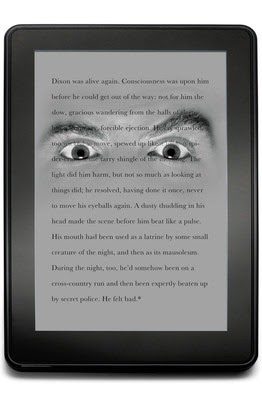
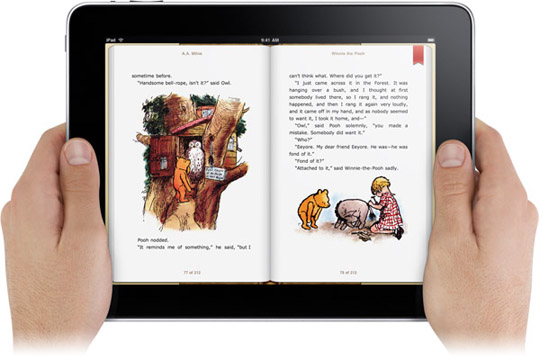
Books are becoming much more digital. The following three pod casts address different aspects about these new e-readers that we might not have noticed in the past.

E-Books that read you

      - E-books now collect data about how you read your e-book. This is shaping how books are being written.
     - This data allows Amazon and Barnes and Noble (creators of the Kindle and the Nook, respectively) to see what people are reading within each book. It also allows the companies to know what to offer certain readers based on their preferred genre.
     - Authors are starting to release digital copies of their books so they can receive feedback from their readers before the book is even published. The feedback allows the authors to make changes based on what the audience wants.
     - Despite the data taking over, editors will still always be needed. However, now they have to take the data into account.
     - A risk of the data is that we can lose the author’s “voice” in genre authors or fiction authors. It will make reading less personal.
     - The Reader Privacy Act allows privacy of what people are reading on e-books, but it can be pulled if you are under investigation already. They can’t just pull it for no reason and would be a waste of their time.


Books are no longer an Ad-free zone

     - Books are becoming advertising tools and that can make the reader pay nothing for the book.
     - If ads are done in an aesthetically pleasing way and don’t interrupt the flow of reading, then ads in a book shouldn’t be such a big deal.
     - Brian Altounian, CEO and Chairman of WOWIO, uses ads at the beginning that would be personalized for the reader and could navigate them to a different page if they click on it.
     - Ads at the beginning of a book can make a reader worried that the ad will show up again.
     - E-books can offer ads with no fees, or you can buy an e-book for a fee to have no ads.
     - The ads are very broad so that they can sponsor and support ads from companies like DirectTV.
     - There is more opportunity for other e-book companies in the past year and a half than there was when Amazon first started with e-books.


Book It
     - Most common complaint: there are too many books.
     - People still love books but it’s hard for people to find them.
     - The people’s reviews are starting to narrow choices for other people.
     - E-books and scanning of old books can produce more books in bulk and make them available to more people. This is raising the number of choices in the world.
     - There’s a lot of format competition in buying books. People are still buying books, but they are buying more electronic books than print books.
     - It’s hard to gather numbers on how many books are sold. Even the company called Neilsen, which scans books at registers and collects data doesn’t get data from everywhere books are sold.
     - E-books are going up by 3-4%.
     - Young adults are now buying more books and adults are reading more books online than ever before.
     - Publishers are starting to publish less books and selling them directly to the consumers rather than through a book store.
     - Authors can be pirated so they should start doing books tours.


Sources:
E-books that read you
Books are no longer an Ad-free zone
Book It

Ladies and Gentlemen, Carlo Vittorini!

This past week in class Carlo Vittorini came and spoke to us about his time in his career in the business of print media. He was offered his first advertising job in 1955 and did not stop until his retirement in 2000 at age 70. That’s dedication. He spoke to us for a long time (longer than he actually wanted to) about his career and there were a few things that stuck out in his talk.

           1. You may start out wanting to do one thing, and end up doing something else. Mr. Vittorini started out wanting to be a writer. He majored in English in college. But his skills led him in the advertising direction.
          
           2. Trade magazines are genre magazines targeting a certain career demographic.

           3. Some publishing companies can control a number of different publications in a given area. Whether it be major magazines or small town newspapers or even newsmagazines, these publishing companies become oligopolies.
          
           4. There has been a huge progression of different kinds of printing presses through Mr. Vittorini’s career. The publishing companies went from hard, metal presses to electronic digital presses.

           5. Making early decisions can be a very bad idea. Everything is changing too often to make a decision early, and this can affect ratings if things are not current or up to standard because of a poor decision.

           6. Some companies don’t function well because they run on a top-heavy system. When a company is top-heavy, it affects their profit margin in a negative way.

           7. Mr. Vittorini was able to help build up some of the newspapers he worked for because he had skills in marketing and production.

           8. No matter how many new multimedia technologies are made, print media will never die out completely. There will always be a hard copy to back it up.

           9. Relating to the last point, printed word will never disappear. It‘s our main outlet of communication. Whether it be through texting, through a blog or an email, we use language to communicate, which is expressed through printed word.

          10. Finally, Mr. Vittorini kept repeating one main point over and over again. If you don’t like what you’re doing, chances are you won’t do well. But if you do like it, you can climb higher in your career.

Mr. Vittorini’s talk was very informative and very interesting. He was sure that he was going to bore us, but I don’t think he did. It was cool to listen to someone who has a lot of real experience.

Monday, October 1, 2012

Print media disappearing

Technology is changing the way that print media is being produced. We are way passed the days of the original printing press. These days, it is more common to see people reading what was once a popular print media on an e-reader. It has become cheaper to produce print media digitally. Once a book is online, it is easier to keep track of the copyrights and can be distributed in a number of ways. The most popular methods of distributing books are through Google, who has digitalized thousands of books, through e-readers such as the Kindle from Amazon or the Nook from Barnes and Noble, and printing books instantly. This has become very appealing to the masses because it has made it easier to gain access to pretty much every book ever written. Unfortunately, it has also contributed to the decline of print media, like books and magazines. So it’s hard to say whether or not this shift is really a good thing.
It hurts me to say that books are becoming less prominent in the world today. While I don’t want to say they are becoming obsolete, they are certainly headed in that direction. E-readers such as the Kindle and the Nook allow readers access to a number of different books in a number of different genres. Once they have the e-reader, the reader can download a book instantly to the device without having to physically go to the book store. They also don’t have to wait for a book to be shipped to their house through online shopping. E-readers are also ideal for readers who travel a lot. The Kindle and the Nook can hold thousands of books at one time. That means you don’t have to waste space in your carry-on bag with books. Finally, the e-reader is more appealing than a physical book because it doesn’t kill any trees, and people these days are becoming more aware of their carbon foot print. It’s these reasons that are causing books to become obsolete. I can’t speak for the rest of the world, but I know I still like books and don’t want them to disappear.

Monday, September 24, 2012

The Museum of the Moving Image


The Museum of the Moving Image is clearly one of the greatest museums I have ever been too. There were so many cool things in that museum that could not be seen in another museum. One of my favorite things in the museum was the stop-motion display. It was really cool to learn about how stop-motion films are made. We even got to make our own stop motion videos on the computer. What was amazing to me was how much time it actually takes to make a stop-motion animation. It is unbelievably time consuming. You can take twenty five pictures, changing something slightly to make a flipbook, and you’ll have five seconds of an animation. But it makes some really cool animations.


Another thing I liked about the museum was that it had some really old stuff in it. I know this is common in museums, but it was really cool to see some of the first cameras. Although they did not have the original Lumiere camera, they had some pretty old ones. I learned a lot about how cameras were changing throughout the years. While I knew that some of the old cameras were operated by a crank, I learned that the cranks were actually controlling the shutter speed as well as the amount of light that was exposed to the film in the camera. It was very informative and stuck out in my mind.


Finally, one of the exhibits that I thought was great was the exhibit that had the stand in dummy of Yoda and other props like a giant version of Freddy Kruger’s sweater. I didn’t know that they actually made larger or smaller props for certain shots in movies. But looking back, it actually makes more sense, because it probably wouldn’t be possible any way else. The giant sweater, for example, was used in a scene where the souls were pulling themselves out of Freddy’s body. I also liked that they had a replica of the Yoda puppet. This was one of the coolest museums ever, and I would love to go back someday.

Radio, Radio


1. What kinds of radio networks exist now?

There are different kinds of radio networks that are starting to form these days. One of the major stations is the National Public Radio, which was significant in the news and public affairs as well as linking many radio stations together. There are other kinds of radio other than music radio too. Talk radio is a kind of station that specializes in talking about the news, sports or anything local. These stations will tend to be more AM stations rather than FM.

2. How are radio formats related to music genres?

Radio formats play off of what music genres people want to here. Because of this, radio formats can change frequently. For example, in the 1990’s many radio stations switched over to alternative rock because that’s what was popular at the time. Other stations will play Top 40 hits, or songs that are very popular. Today, many stations are playing a variety of music from different decades, called “Jack.” This is how radio stations try to get ratings.

3. What are the target audiences for some of the main radio formats?

Radio formats base their choice of target audiences on certain demographics. For example, a Top 40 station might be aimed towards a younger demographic. Talk radio is usually aimed for adult listeners. The radio stations can base what music they should play on certain demographics.

4. Why does the concentration of radio ownership cause concern?

Concentration of ownership is becoming a problem in radio. More times than not, a couple of large companies can own as many as half the radio stations in a given city. This poses as a problem because it reduces the chances of local ownership of radio stations. This also reduces the amount of diversity on the radio, even if the owners say it will increase diversity.

5. What copyright challenges are raised by Internet radio and pod casting?

Music that is released is almost always copyrighted. According to copyright law, if you want to play a song, you have to pay in order to do so. Internet radio and pod casting have many issues when it comes to playing copyrighted music on their stations. Internet radio stations have to pay the song writers and performers at a higher rate than satellite or terrestrial radio stations just to play the songs on the internet.

Monday, September 10, 2012

Monopolies and Mass Media


There are lots of gadgets out in the world these days. Many of them are made by Apple, Inc., which was owned by Steve Jobs up until his death. The question that is always asked about whether or not Steve Jobs had a monopoly on the media business. It can be pretty easy to say that this could be true in this case. For years now Apple has been producing a number of different products to appeal to the masses such as iMacs and laptops. While they are still in competition in the computer department, in other areas they are dominating. For example, most people who like to listen to music are listening from their iPod. To the best of my knowledge I know only one person who has ever owned a Zune, which was the Microsoft equivalent of an iPod, which was phased out years ago. Because of this, there isn’t much of a variety in the mp3 player market. This results in the Apple products being more expensive because there is not much competition against them. For this reason it can be said the Steve Jobs was a monopolist.


Mass media is a business in itself. Basic theories and economics shows that mass media should be making profits. One of the main ways that mass media makes a profit is through the law of supply and demand. This law states that cost savings caused by economics of scale can be passed down to the customers. This results in more of the product being made, which makes more people by the product, causing a spiral effect of profits and supply and demand.
There are other ways that mass media can make profits. For example, in many commercials these days use songs that were written and copyright by a certain music artist. The artist receives a copyright royalty fee in exchange for them to use their song. This is only one of many different ways to make money, including advertising and syndication. It is important for the mass media to make profits because it helps keep the mass media running.